Tag: makeadifference

A Volunteer’s Impressions

Melissa Vegas moved to Singapore from Goa, India in July 2015.  She has a Bachelors in Architecture from Goa College of Architecture, India and a Masters in Built Environment from University College London.  She is currently working as a Senior Designer at Aedas on one of the many MRT projects in Singapore, and volunteered in iShine’s “Design A City” theme which ran for 4 Saturdays from July to August 2016. She is also a member of Society of St Vincent de Paul, a Catholic charity dedicated to serving and empowering the poor and under-privileged.  In her free time, she pursues different interests including the arts, heritage, social dancing, trekking and capoeira. 


whatsapp-image-2017-02-16-at-15-38-37


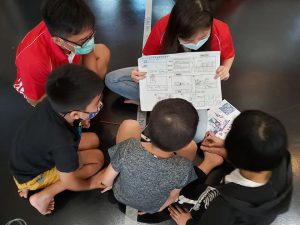
It was a Saturday morning in July, I found myself with a couple of my colleagues in the sunny atrium of the URA building being briefed by a member of the iShine team on the do’s and don’ts for volunteering with children. In this instance, with children participating in iShine’s Design a City theme. The session today was going to be a tour of the URA city gallery and introduction to their project. Sleep deprived and tired from the work week, I watched, with a hint of apprehension as the kids scampered off the bus and burst through double doors with the energy only children seem to have. The energy was contagious and I was gently nagged into a state of heightened awareness. The iShine Team expertly started directing the children for their tour through the URA galleries. And what followed was a stream of inquiring questions, and clusters around the interactive screens where everyone waited their turn. Finally we settled into our workspace – armed with post-its and colour markers, we set out to design our Dream City in the year 2035! I left the building that day with a feeling of lightness and a much needed change in perspective.


Now is perhaps a good time to mention that I work as an architect, and moved to Singapore for my present job. I am extremely lucky to be part of a very specialized team that designs MRT (Mass Rapid Transit) systems, here in Singapore and the region. My volunteering experience in the past has mainly been centered on befriending seniors and working with kids and would include activities like arts and craft, puzzles and games. This would be the first opportunity I had to combine my design skills with volunteering, a challenging combination for a professional.


Fortunately the programme was well structured and apart from allowing the children to explore architecturally interesting spaces like the URA and Fusionopolis, it was focused on drawing out the children’s natural skill set.

For example,

  • (i) the budgeting activity in the second session helped prioritise various interests and forced each team to come to a democratic consensus;
  • (ii) the model building in the third session nurtured sensory and material sensitivity;
  • (iii) Presentations in the last session built self-esteem and public speaking skills.


I learnt early on that there were no lack of ideas and it was best to sit back and make sure every child is heard and included.  Sometimes it’s not really in the ‘doing’, but just ‘being’ that makes the difference.


My primary challenge with volunteering with children that they need time. As a volunteer it is important to be consistent, as children can get attached quite easily. I remember when I skipped a weekend, I was continually asked why I had not come. Another challenge for me was when the kids, being kids, acted out. This may be in the form of fighting with each other or remaining unresponsive or elusive. It is best to leave situations like these to a core, regular team member or the social worker on-attendance who are trained professionals and know the case history of each child. So when you do decide to volunteer it is important to know from the organizers who are the children you will be working with? Their background? And how and why my appearance (presence) is going to benefit them?


Do I recommend Volunteering? Whether you are in Singapore for a while like me or a local, volunteering helps you get the essence of a country like nothing else. I would say give it a shot; but add that it’s not for everyone. If it works for you, that’s great! For me, I can say that it makes me grateful and mindful of the world around. And reminds me that there are different ways of being and it’s alright. This is why I keep volunteering!
The Cry of the Poor

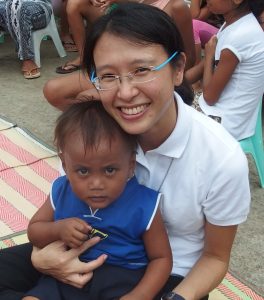
Our very first Blog Post is written by Charlene Chua, a pioneer EDIS staff. Charlene was working in the urban development sector in Singapore for 9 years when she felt the need to discern her calling in life. She subsequently spent 5 months in New Zealand attending a spiritual programme and 7 months in Cambodia as a volunteer teacher. Currently based in the Philippines, she continues her process of discernment in a Catholic religious formation house. Charlene’s interests are in social issues (especially the marginalised), geography and playing football.


OLYMPUS DIGITAL CAMERA


The Cry of the Poor


 As an aspirant undergoing religious formation, my main duties are to study well, pray well and work well. ‘Work’ entails the responsibilities I am assigned, which can be in the form of cleaning, washing, cooking, preparing for celebrations (there are many in a Salesian house!), etc. While in formation, we are less involved in the active part of the Salesian mission – to reach out to the poor, especially the young, in society.


The sight of the poor is becoming all too familiar. No matter which country I am in, the voiceless poor are crying out.


  • In Pyin Oo Lwin, Myanmar, a band of beggars live in a squatter next to the train station. Many of them come from other parts of the country in search for a means to survive. Unfortunately, they cannot find work and often resort to stealing.


  • In New Zealand, there are homeless people sleeping on the streets wrapped in black trash bags to keep themselves warm in winter.


  • In Singapore, I was told a story of a single mother with 5 children who is doing part-time work so that she has the flexibility in hours to take care of her children. Her single income can barely make ends meet.


Rich or poor, developed or developing, every country has their share of poor. Sometimes they are visible, other times they are hidden. How can this be? Why are there so many people who are suffering? These are questions we should be asking.


At a more personal level, I think we should also be asking ourselves:


  • Do I want to see the poor?


  • Do I have the courage to look at the poor in the eye and in good conscience not do anything about it?


What has the poor got to do with me?


It is sad, but this is a question that some people ask or are tempted to ask.


In countries like Singapore where meritocracy is highly lauded, we are taught that if you work hard, you will do well. But is this always true? The fact is that no two human beings are the same. From a genetic point of view, we are born with different abilities and disabilities. From a societal point of view, the options and opportunities available to each person differ, no matter how much we try to even out the playing field.


Arising from our growing individualistic attitudes, the sense of entitlement runs high in some. They believe that what they have earned is through their own effort and hard work, hence everything belongs to them and they have the right to keep it solely for themselves.


We know that historically, man never used to live in such an individualistic manner. Living conditions were often much more communal and things were shared within the community. Those who had more gave to those who had less. In the Singapore context, we do not even have to think too far back. The ‘kampong’ (‘village’ in Malay) environment that some of our parents or grandparents lived in in the 1960s was exactly that. The ‘kampong spirit’ that we sometimes refer to includes the spirit of sharing.


Humans are clearly social beings and are made for community. This necessarily means that we have a responsibility towards others who are part of our community, i.e. the society/world in which we live. How can we live in good conscience when there are so many poor people in our midst?


We Need To Act 


I cannot emphasise enough the urgency of this call to action I am making. There are too many poor, too many people who are living without proper shelter, food, water and sanitation. In a recent BBC report, it says that nearly a fifth of children in developing countries – almost 385 million young lives – are living in extreme poverty, according to the World Bank and UN’s children’s agency.


So what can you do? Let me suggest some possible ways:


  • Look for organisations, agencies, interest groups that work with marginalised groups in society. See which you are interested in or moves your heart. Contact them to ask how you can play a part.


  • Set aside some money each month for a charitable course. Donate to the cause(s) which are most in need or you find meaningful.


  • Commit to volunteering, whether on your own or with an existing volunteer group.


  • Start thinking about the causes of these inequalities and injustices and ask yourself how you or anyone you know can do something about it. Social action is important but social justice (ways to alleviate the causes of these inequalities) is even more pertinent.


  • Unite yourself in spirit with the poor by making some material sacrifices. For example, you could choose to forgo buying an item which you desire, eat one less meal a day or eat less in a meal, make an intentional choice to simplify the way you live, etc.


  • Pray for the poor and less fortunate every day.


This list is not at all exhaustive but it can be a way to start.